
How Scottish slate roofs age
Natural slate is one of the longest-lasting roof coverings there is. On many older Glasgow tenements, villas and stone-built houses around the Clyde and the Gareloch, the slates themselves are often in better shape than everything holding them in place.
That's the key thing to understand. A slate roof rarely fails because the slate wears out. It fails because of the parts around it:
- The nails. Older roofs were often fixed with iron nails, which rust over the decades. When they corrode through, slates start to slip. Roofers call this nail fatigue or nail sickness.
- The timber underneath. Traditional Scottish roofs usually have slates nailed straight onto sarking boards, while others use battens. Either can rot if water has been getting in for years.
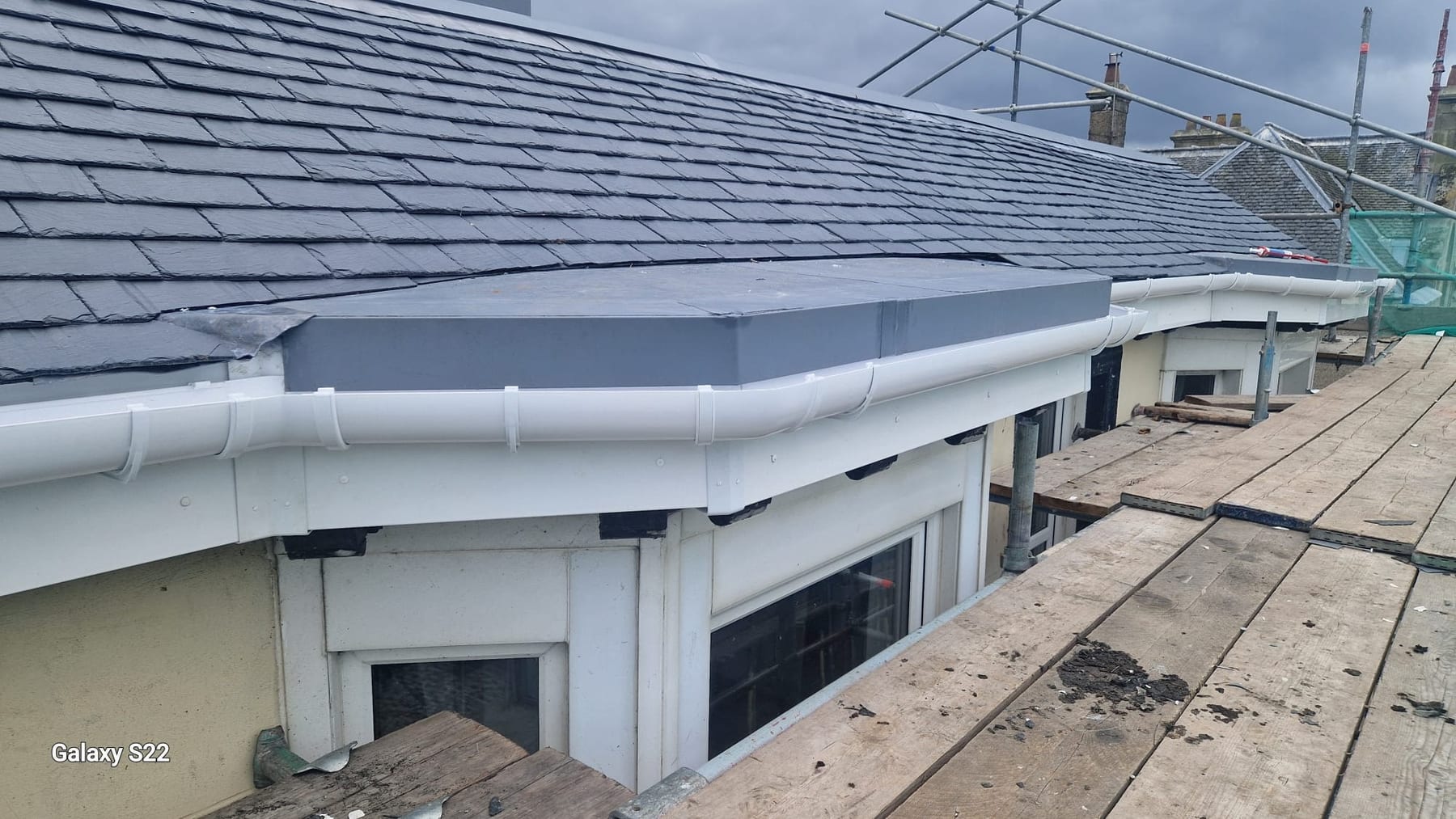
- The lead and the junctions. Flashings round chimneys, valleys between roof slopes and abutments against walls take the most water and movement, and they tend to fail first.
- The weather. Wind-driven rain, frost and long wet spells in the west of Scotland put real strain on every weak point.
So the real question is usually not “are the slates finished?” but “how much of the roof's structure and fixings are still sound?”
Signs a repair will do the job
If the problem is confined to one area and the rest of the roof is sound, a proper repair is usually the sensible choice. Typical examples:
- A few slipped or cracked slates. A storm, a fallen branch or a handful of failed nails. Individual slates can be refixed or replaced, ideally with matching slate.
- A single, local leak. A damp patch on one ceiling, often under a chimney or a valley, usually points to one specific defect rather than a failing roof.
- Failed lead flashing. Lead that has cracked, lifted or come away from a chimney stack or wall can be renewed on its own, without touching the rest of the roof.
- A worn or blocked valley. The channel where two roof slopes meet carries a lot of water. Relining a valley is a contained job.
- Damaged ridge or chimney pointing. Loose ridge tiles and crumbling mortar can be rebedded and repointed.
Signs of wider failure
Some roofs have reached the point where patching just moves the problem around. These are the signs that point towards a new roof, or at least re-slating whole slopes:
- Widespread slipping. Slates coming loose across the whole roof, not in one spot, usually means the nails have failed throughout. Refixing a few at a time won't keep up.
- A sagging roofline. A dip along the ridge or a bowed slope suggests the timbers underneath are weakened.
- Rotten battens or sarking. If the timber is soft, crumbling or stained right through when viewed from the loft, slates have nothing solid to be fixed to.
- Repeated leaks. If you've had several repairs in different places and water keeps finding a new way in, the roof as a whole is likely past its best.
- Lots of delaminating or flaking slates. Some lower-quality slate breaks down over time, flaking in layers. When that's widespread, it's time to renew.
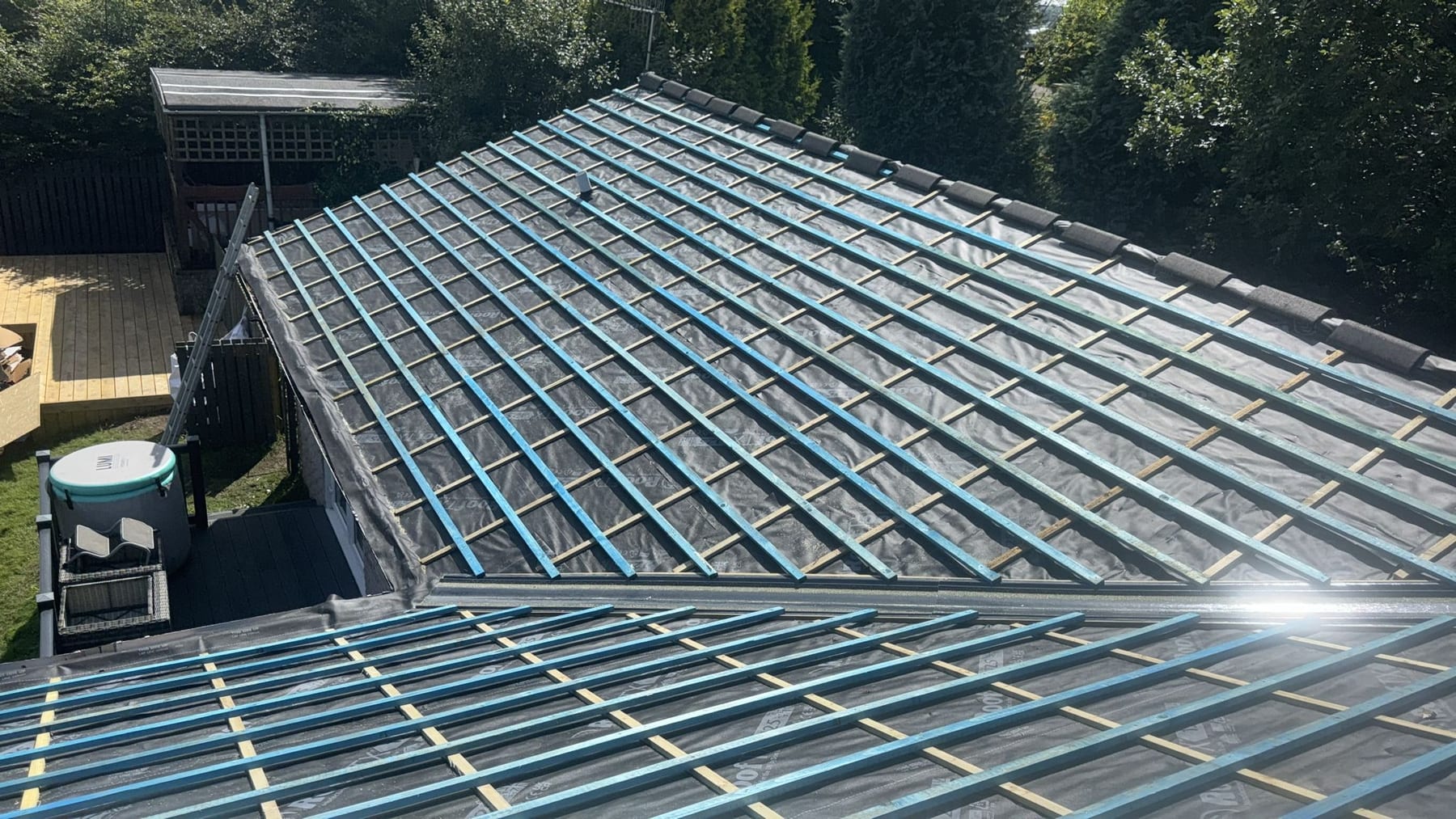
Even then, good slates can often be salvaged and reused on the new roof. On a new or re-slated roof, materials such as breathable roofing membrane, treated battens or timber and new lead flashing go in underneath so it's built to last.
What a roofer checks on an inspection
A proper inspection should tell you what's causing the problem, not just what you can see from the street. When we look at a slate roof we check:
- The slates themselves: slipped, cracked, missing or flaking slates, and whether the problem is in one area or right across the roof.
- Fixings: signs of nail fatigue, such as slates held on with tingles (small metal clips) from earlier repairs, or rows that have started to creep.
- Lead flashing: around chimneys, at abutments and in valleys, looking for splits, lifting and old mortar fillets that have cracked.
- Ridges and hips: loose or missing ridge tiles and failed bedding mortar.
- Chimney stacks: pointing, pots, flaunching and the flashing where the stack meets the roof.
- The loft, where we can get access: daylight showing through, damp or stained sarking, rot in battens or rafters, and any sag.
- Gutters and downpipes: blockages and leaking joints that can send water back under the slates or down the walls.
After that you should get a clear explanation of what's wrong and a written quote for putting it right. Gutters are often part of the story. See our guide to the signs your gutters need repair.
Moss, and why it matters
Moss grows well on slate roofs in our damp climate, especially on north-facing slopes and under trees. A bit of green might look harmless, but heavy growth causes real problems:
- It holds water against the slates and the joints between them, so the roof stays wet for longer.
- It can creep up under the edges of slates and lift them, letting wind-driven rain get in.
- In a frost, the trapped water freezes and expands, which can crack weaker slates.
- Loose clumps wash down and block gutters, valleys and downpipes, leading to overflows and damp walls.
Moss on its own doesn't mean you need a new roof. Removing it carefully, and dealing with any slates it has disturbed, is often enough. Slate is brittle, so cleaning should be done with care rather than heavy-handed blasting, and nobody without proper access equipment should be walking on a slate roof.