
A wet, stormy winter is on the way
The Met Office has warned that this year's unusually strong El Niño could bring a wet and stormy winter. Here in the west of Scotland, that means Atlantic weather arriving first: strong winds with rain driven sideways into every gap, often for hours at a time.
The cost of that weather keeps climbing. According to the Association of British Insurers, payouts for storm damage to UK homes rose by 32% to £244m in 2025, the year of Storm Éowyn and Storm Floris. Claims for all weather damage to homes and belongings reached £758m.
Most of that damage starts with something that was already loose or worn: a slipped slate, a lifted strip of flashing, a blocked gutter, a crack in the render. Regular maintenance is how you stop a small problem becoming a big one. Here's what to check, starting at the top.
Inspect your roof
The roof is your first line of protection. High winds find anything weak up there, rip it loose and can turn it into flying debris that damages your home, your car or your neighbour's. Look for:
- Slipped, cracked or missing slates and tiles. A slate that has slid down even a few centimetres leaves a gap, and it's the first thing a strong gust will take. On older slate roofs, slates usually slip because the nails holding them have rusted through.
- Ridge and hip tiles. These are usually bedded in mortar. When the mortar cracks and crumbles, the tiles work loose, and a ridge tile coming off in a storm is heavy and dangerous.
- Moss. A thick build-up holds water against the slates and the timber underneath, and lifts their edges. When it washes off, it blocks the gutters and valleys.
- Flashing. Chimneys, skylights and vents are sealed to the roof with strips of flashing, usually lead. It should sit flat and tight, with no gaps where water can get in behind it.
- Valleys. Where two roof slopes meet, a lot of water runs through a narrow channel. If a valley is blocked or its lining has worn through, water backs up under the slates.
You can spot a lot from the ground with a pair of binoculars, and from the loft. Look for daylight through the roof, or damp patches on the timbers. Please don't go up on the roof yourself. Without proper access and safety equipment, a roof is a dangerous place, especially a wet one. That's a job for a roofer, and on a free roof health check it's exactly what we do.
A few slipped slates are usually a straightforward repair. Read more in slate roof: repair or replace?
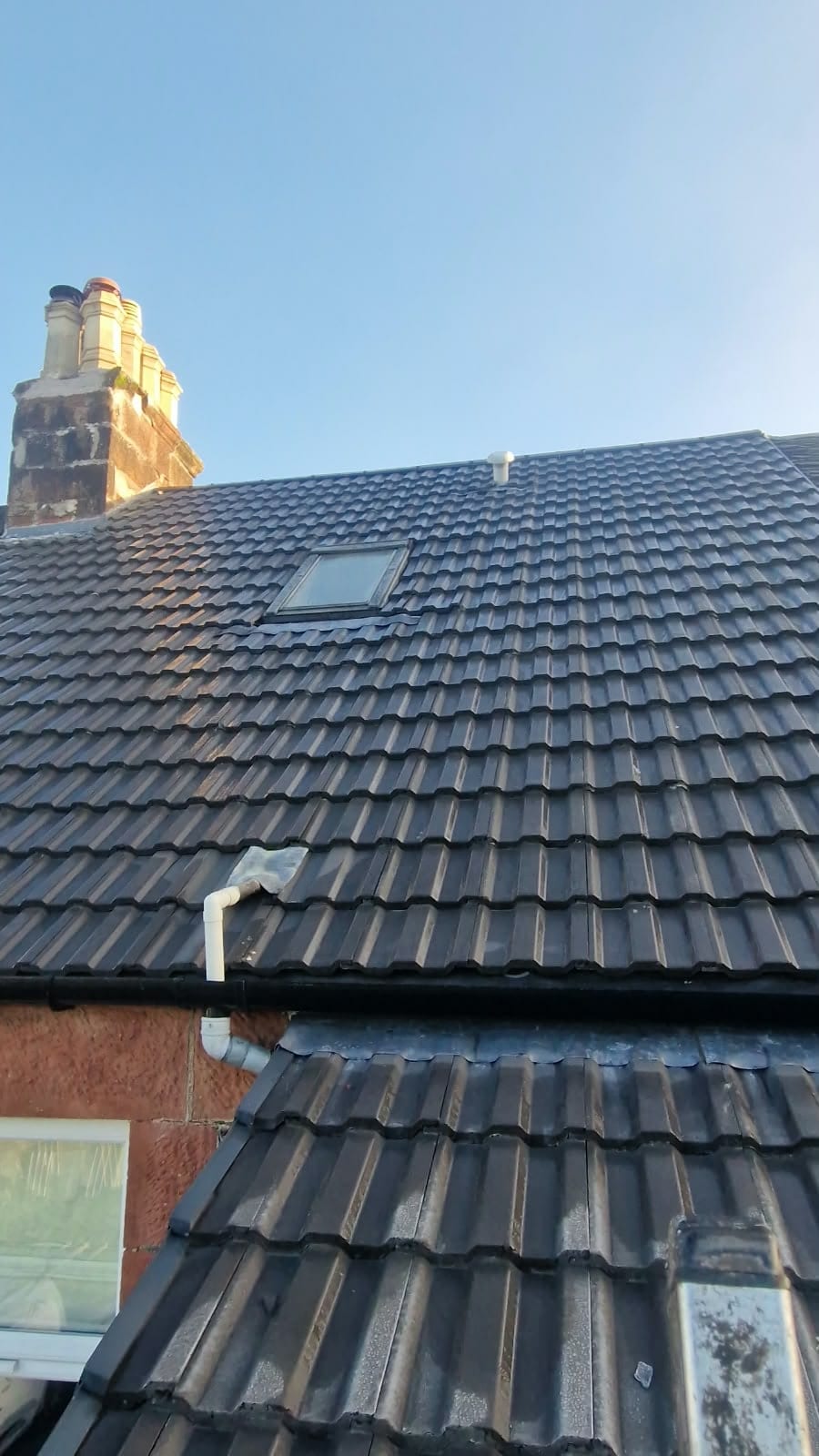
Clear your gutters, and check the trees
Gutters carry heavy rain off the roof and down to the drains. When they're blocked, the water has to go somewhere else. It spills down the walls and soaks into the stonework, brick or render, which leads to damp inside. Or it pours onto the ground beside the house, where over time it can wash away the soil around the foundations.
Autumn, once the leaves are down, is the time to clear them out and fix any joints that drip or runs that sag. Behind the gutter, check the fascia board it's fixed to. If that has gone soft, the brackets can't hold a full gutter in high wind. Our article on the signs your gutters need repair goes through what to look for.
While you're looking up, check the trees near the house. Overhanging or unhealthy branches can break slates and gutters when they come down, and leaves from them clog gutters and drains. Larger trees are a job for a qualified tree surgeon.
Don't forget the walls: render, roughcast and stone
Walk around the outside of the house and look for weak spots: cracked or blown render and roughcast, staining, and places where rainwater collects or runs down the same patch of wall.
Damp from small defects outside is one of the problems homeowners most often underestimate. A crack in the render might not look like much, but once water gets in behind it, it spreads. Left alone, a modest repair outside can turn into plaster, decoration and timber repairs inside that cost many times more. We repair roughcast and sandstone as well as roofs. See our roughcasting and sandstone work.
Seal windows and doors
Check the seals and the frames around your windows and doors for gaps and cracks, and fill them with sealant or draught-excluder tape so wind and rain can't drive through. Self-adhesive foam strips, brush seals and compression strips all work on doors, and covers for the letterbox and keyhole stop the draught there too.
Secure the garden: furniture, fences and gates
Before a storm, bring in or tie down anything that could blow about: plant pots, garden furniture, bins, barbecues and trampolines. In high wind they become missiles, and windows and roofs are often what they hit.
Fences and gates take a battering in storms. That's why most standard buildings insurance policies won't pay to repair them. Push each post and panel, and refix anything loose. A post rotted at ground level will go over in the first strong gust and take the panels with it. If you're replacing a fence, concrete posts are far stronger, and panels with gaps that let some of the wind through are less likely to blow over than solid ones.
Insulate your pipes and find your stopcock
Burst pipes cause some of the most expensive damage of all. The Association of British Insurers says insurers settled roughly 8,000 claims for weather-related pipe damage in 2024, paying out £250m. The average claim was almost £33,000.
- Lag exposed pipes. Pipe insulation from any DIY shop is cheap and easy to fit, especially on pipes in the loft, the garage or under the floor. It also saves a little on your energy bill.
- Insulate an older hot water tank. A tank jacket costs little and keeps the heat in.
- Find your stopcock before you need it. It's usually under the kitchen sink. If a pipe bursts, turning it off stops the water coming into the house. If you're leaving the house empty in winter, turn it off and drain the remaining water from the pipes.
Get ready for the worst of it
The government is encouraging every household to keep some emergency supplies in. A simple kit covers most situations:
- Bottled water and tinned food
- A portable phone charger, torches and spare batteries
- Blankets and warm clothing
- Emergency numbers: 105 for a power cut, 0800 111 999 for a gas leak
It's also worth getting the boiler serviced before the coldest weather. In a freezing storm the house loses heat quickly and the boiler works harder, and a service picks up the pressure drops and worn parts that make one stop when you need it most.
Protect against flooding
If your home is at risk of flooding, look at the airbricks first. They're often the first place flood water gets into a house. Kitemarked self-closing airbricks are a lasting fix, and temporary covers, or even wide aluminium tape in an emergency, will seal them for a storm. Take any temporary cover off afterwards: airbricks are there to keep air moving under the floor.
Flood protection doesn't always mean thousands of pounds. Domestic pumps and door barriers can cost a few hundred. If you already have flood equipment, test it now. Check the seals and fixings, make sure every part is there, practise fitting the barriers, and run the pump.
Will your insurance cover storm damage?
Buildings and contents insurance usually covers some storm and weather damage, and it may pay for somewhere to stay if your home can't be lived in. But there are two catches worth knowing about before winter.
- It has to be a storm. Insurers have their own definition, which can depend on wind speed or how heavy the rain was.
- It has to be sudden damage. Home insurance covers sudden and unforeseen damage, so an insurer will look at whether the storm really caused the problem, or just exposed wear that was already there. Slipped slates, perished flashing or crumbling ridge mortar that a storm finally finishes off can be put down to wear and tear.
That's one of the best reasons to have your roof looked at before winter. Anything worn gets put right while it's still a small job, and you know your roof was sound going into the storm season. Check your own policy's limits, excess and exclusions too, not just the price.
After the storm
Look, don't climb. A roof after a storm is wet, may be loose, and is no place for a ladder.
- Walk round the house and look up from the ground, from the garden and from upstairs windows.
- Look for slates or tiles on the ground, gaps on the roof, gutters hanging away, and anything leaning that wasn't before.
- Check the loft and upstairs ceilings for fresh damp.
- Take photos of any damage, with the date, before anything is moved. Your insurer is likely to ask for them.
If water is coming in, put a bucket under it and, if it's near a light fitting, switch that circuit off at the fuse box. Then call us. See our emergency roof repairs.
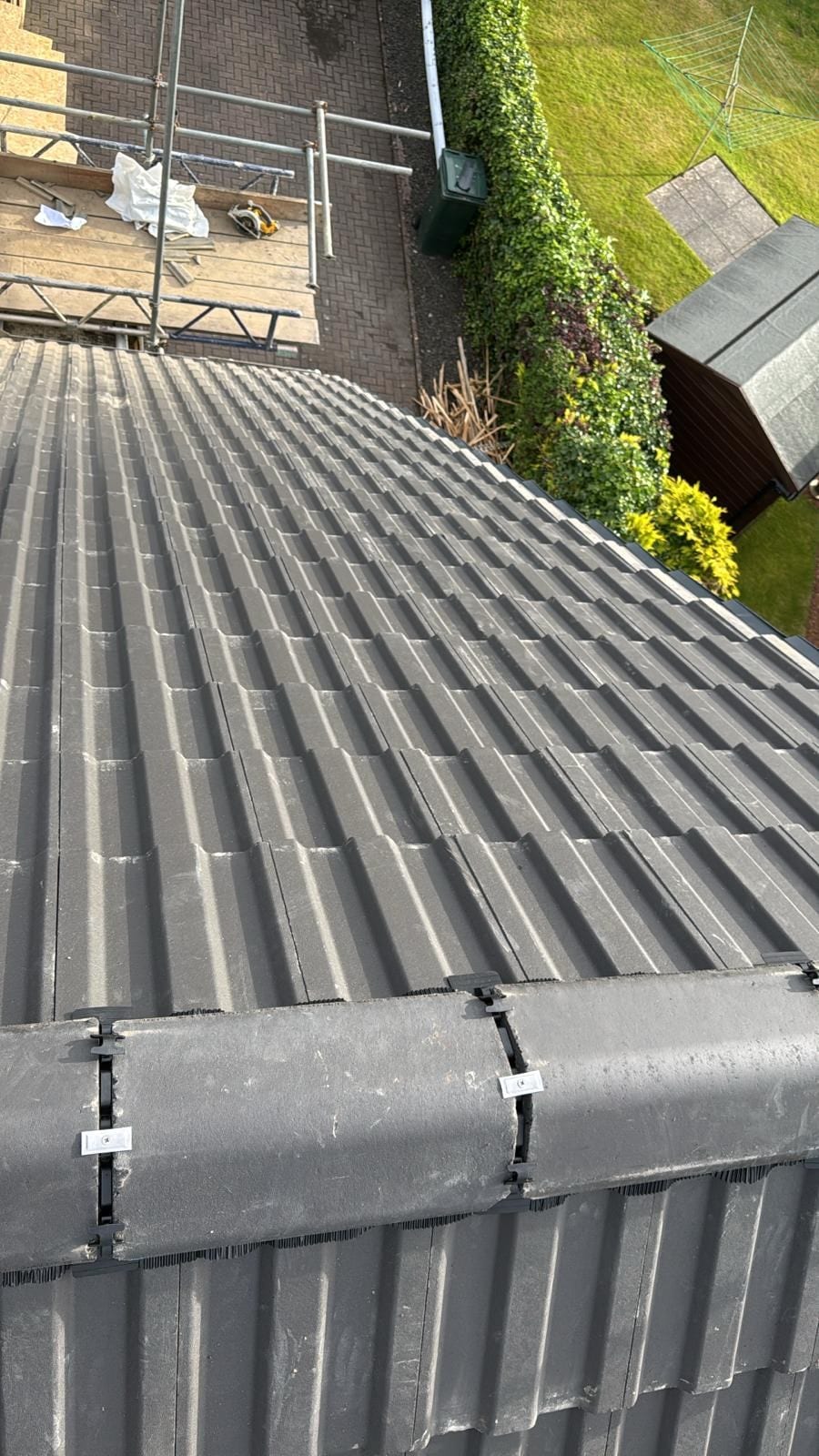
Our free roof health check
You can do a lot of this yourself from the ground. What you can't safely see is the top of the roof, the back of the chimney and the inside of the valleys, and that's where storm damage usually starts.
That's what our free roof health check is for. We'll come out and go over your slates or tiles, ridges and hips, chimneys and lead flashing, valleys, gutters and downpipes, and the fascias and roof edge. We'll point out anything else around the house we spot that could come loose in a storm. Then we'll tell you plainly what we found: what's fine, what can wait, and what's worth doing before winter.
There's no charge and no obligation. If something does need doing, you get a written quote before any work starts. As we always say, we will only recommend a new roof where it's absolutely necessary.
Book your free roof health check
Figures from the Association of British Insurers, as reported in the Guardian, October 2026.